It is with great pleasure that we invite you to the 22nd Annual Session of the Mediterranean Model United Nations, taking place from the 5th to the 7th of February 2027 at the European University Cyprus in Nicosia. We look forward to welcoming you to this year’s MEDIMUN for three days of debate, diplomacy and collaboration. In this prospectus, we hope you find everything you need so as to familiarise yourselves with all that the MEDIMUN experience entails.
This year’s theme “Beyond The Deadlock: Cooperating Under Pressure” emphasises the importance of reaffirming multilateral cooperation amidst an increasingly fragmented geopolitical landscape, where the effectiveness of international institutions faces growing challenges. As we observe shifting political dynamics, ongoing conflicts and evolving balances of power, we encourage delegates to critically consider how the role of the United Nations can be strengthened and remain effective under pressure. Through this theme, we seek to draw attention to the importance of meaningful international cooperation and to the vulnerable people and communities that are most affected when collective action is insufficient.
What is MEDIMUN?
MEDIMUN is a United Nations simulation for teenagers aged 15-19. Students assume the role of delegates, representatives of a UN Member State which has been assigned to them and discuss, construct, and debate resolutions after extensive research into their allocated country’s policies. These resolutions or documents detailing their suggestions and solutions to world issues provide the basis for multifaceted debate and constructive discussions on varied topic areas. MEDIMUN is an accredited THIMUN conference, which approves similar conferences held around the globe, in which young people have the opportunity to gain knowledge not only of individual countries, but also of the function of the United Nations through a hands-on experience. Directors, usually teachers, are responsible for the training of delegates and leading the delegation of students with reference to the ‘Parliamentary Procedure’ of the UN, which helps to ensure that debate takes place in a formal setting. MEDIMUN is the largest and oldest MUN conference in Cyprus and is run on a not-for-profit basis by volunteers.
Detailed history of MEDIMUN is available at: medimun.org/medibook/library/what-is-medimun

The City of Nicosia
Nicosia is the capital of Cyprus and the island’s economic and cultural centre. Relatively small, Nicosia boasts a medieval walled city, countless historical and religious monuments and an increasingly diverse population. The size of the city makes it very safe and easy to navigate on foot, while also offering a uniquely multicultural setting for the MUN conference. Visitors can wander the meandering Venetian streets and pedestrianised areas which are filled with tiny shops and cafes. Multiple museums showcase every aspect of Cyprus’ varied history, from antiquity to the British colonial period.
The MEDIMUN Experience
Established in 2005, MEDIMUN is the pioneering Model United Nations conference in Cyprus, offering a weekend of high-calibre debate sessions in a professional environment. Participants engage in profound discussions and networking in a multicultural setting, mastering complex global issues. Accredited by the THIMUN Foundation, MEDIMUN embodies diversity and unity, leveraging Cyprus' unique position at the crossroads of three continents.
Twenty-Three Years of History
Over 20 years of legacy
500+ student delegates from Cyprus and worldwide annually.
A dedicated student-led organising team of more than 100 individuals.
Why Participate?
Being a Delegate: A UN Simulation
The MEDIMUN conference follows a United Nations-style framework, with delegates adhering to designated debate procedures, formal terms, and voting practices.
Preparation
A morning workshop on Saturday, November 14th, will acquaint participants with essential rules and conference structure. Refer to the Delegates' Handbook on our website under "Resources" for in-depth information. Please read it before attending the Workshop. Following the Workshop, delegates research their committee-assigned issues and the policies of their represented countries, adopting a genuine UN diplomat's stance.
Resolution Writing
Delegates draft resolutions after in-depth issue research. During the conference, they refine their ideas through discussion and merge aspects of different resolutions into a single resolution. The Student Officer Team offers guidance, and the Approval Panel approves merged resolutions. Approved resolutions undergo debate and voting.
Participation Offers Numerous Benefits
Intensive research to acquire specialised knowledge.
Enhanced English language skills due to precision and formality in official documents.
Fosters unity, tolerance, and respect for diversity.
Realistic insight into international relations, politics, and economics.
Valuable addition to university applications.
Opportunities to build friendships with diverse peers.
Hones public-speaking skills and teamwork.
Important Details: Lectures, Venue & The Debate
MEDIMUN is truly a one-of-a-kind experience for students, offering them a unique opportunity to broaden their horizons and deepen their understanding of current affairs, complex issues, and significant global conflicts. During the conference, you can look forward to informative lectures delivered by experts. These lectures will cover topics relevant to each committee, allowing delegates to engage in discussions, ask questions, and gain deeper insights. Our past lecturers have come from diverse backgrounds, including academia, journalism, politics, and science. They have consistently inspired and motivated students, encouraging them to shape their perspectives on pressing global issues.
Venue
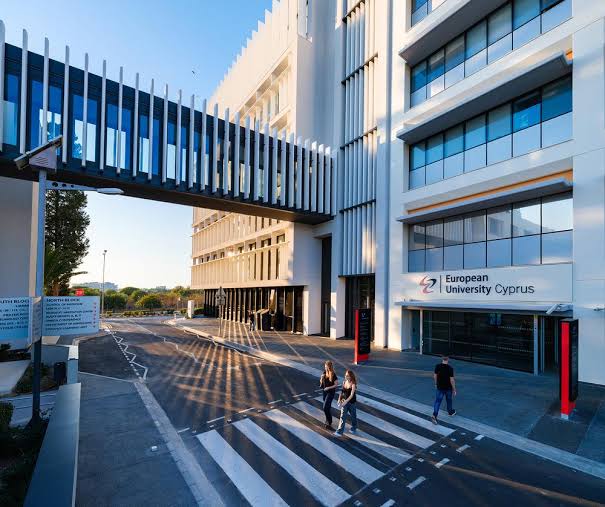
The European University Cyprus serves as our conference venue, providing well-equipped meeting rooms that create a professional environment for delegates to work in. Please note that we do not provide accommodation for schools, whether they are located within or outside of Nicosia. But you can find accommodation suggestions on our website.
Debate
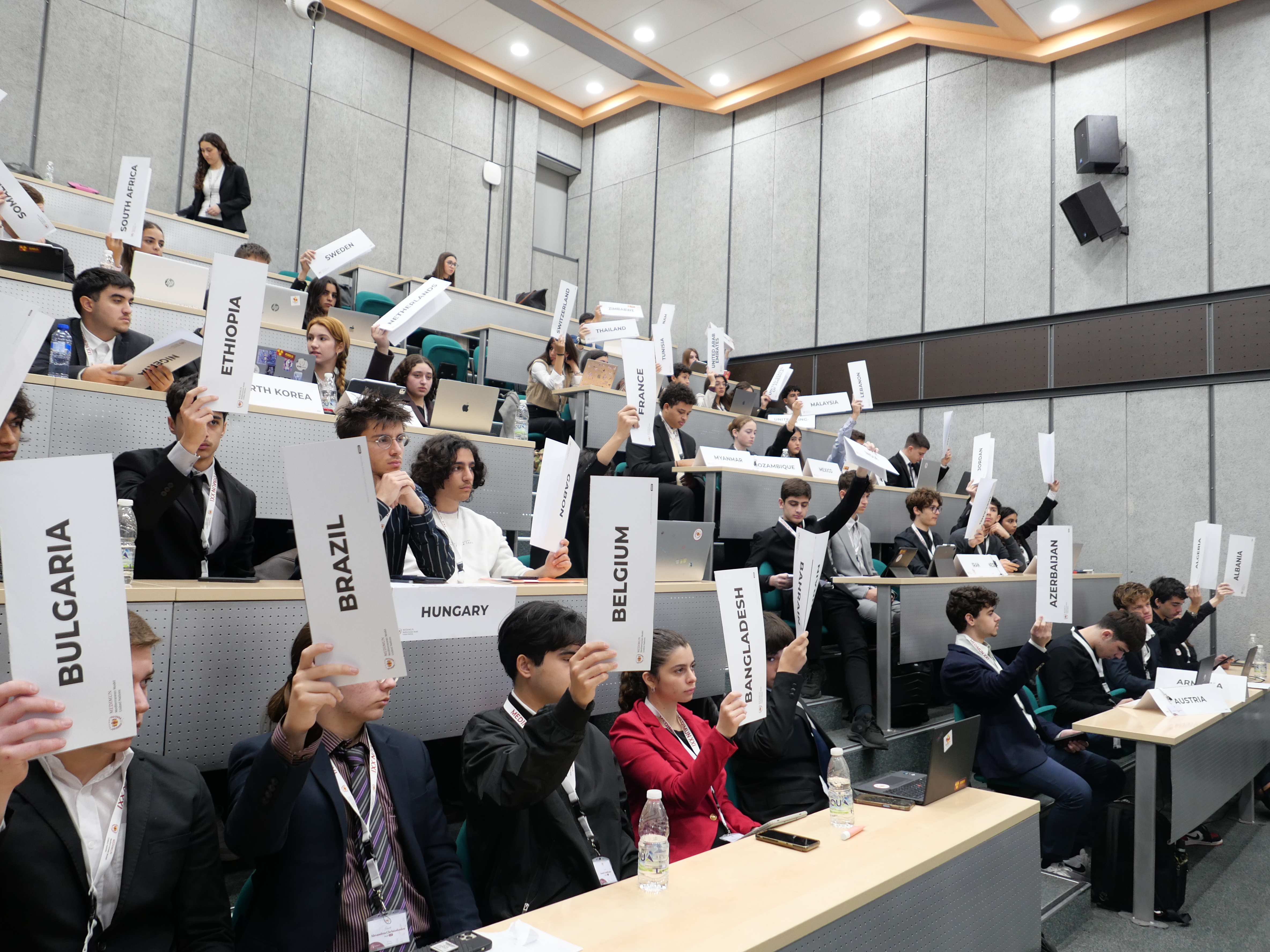
MEDIMUN offers participants a valuable opportunity to hone their public speaking and persuasive skills through spirited debates. With a diverse range of committees, including the four General Assembly Committees, the Historical Security Council, the Security Council, and the League of Nations Council, we cover a wide spectrum of themes and topics. This ensures that every participant's interests are catered for, sparking excitement and passion for lively debates.
The Workshop
To support participants in their preparations, a workshop is provisionally scheduled to take place on Saturday morning, 14th November 2026, at The English School in Nicosia, Cyprus. During our workshop, participants will benefit from the expertise of experienced MUN Directors, the Student Officer Team, and the dedicated MEDIMUN organising staff at The English School. Their aim is to ensure that everyone is well-prepared for the upcoming conference.
Key Workshop Details
Date: Saturday, 14th of November, 2026.
Location: The English School.
Time: Registration starts at 8:00 AM. The workshop commences at 9:00 AM and concludes at around 1:00 PM.
At the workshop, attendees can expect presentations and guidance, answering any questions or concerns they may have about the upcoming conference. Information will be provided on various essential topics, including how to research into a country, resolution writing and structure, guidance on researching into their committee topics, and debate procedure. By providing this information, the workshop aims to equip all participants with the knowledge on conference procedures, allowing them to confidently move forward to the session in February.
It also offers an excellent opportunity for interaction with members of other delegations and MEDIMUN organisers, providing for a smoother transition into the debate setting. Delegates will also be reminded of their position paper deadline and the requirements involved. This will facilitate the confident completion of position papers, whilst developing a holistic view of their country’s policy, enhancing their readiness for the conference.
The Agenda
A comprehensive list of the topics and issues to be debated at MEDIMUN XXII. To participate in special committees, such as the Security Council, Historical Security Council, Contemporary Historical Security Council and the Special Committee on the Charter of the United Nations, schools can enrol for a maximum of 4 additional delegate spaces, and the students will be accordingly allocated to the mentioned four committees. Previous Model United Nations (MUN) experience is necessary for these special committees, as they involve complex diplomatic discussions and procedures.
GA1: Disarmament and International Security
This committee highlights alternative options and preventative measures that may be used to handle any form of security threat, without resorting to violence. In doing so, it reinforces the importance of maintaining international security, whilst peacefully overcoming situations that may escalate into armed conflict or pose a threat to public safety.
Topics |
|---|
The question of addressing the discrepancies in international arms control treaties. |
The question of combatting youth recruitment by criminal organisations through digital platforms. |
The question of countering cyber warfare against national infrastructure. |
GA2: Environmental, Financial and Economic Development
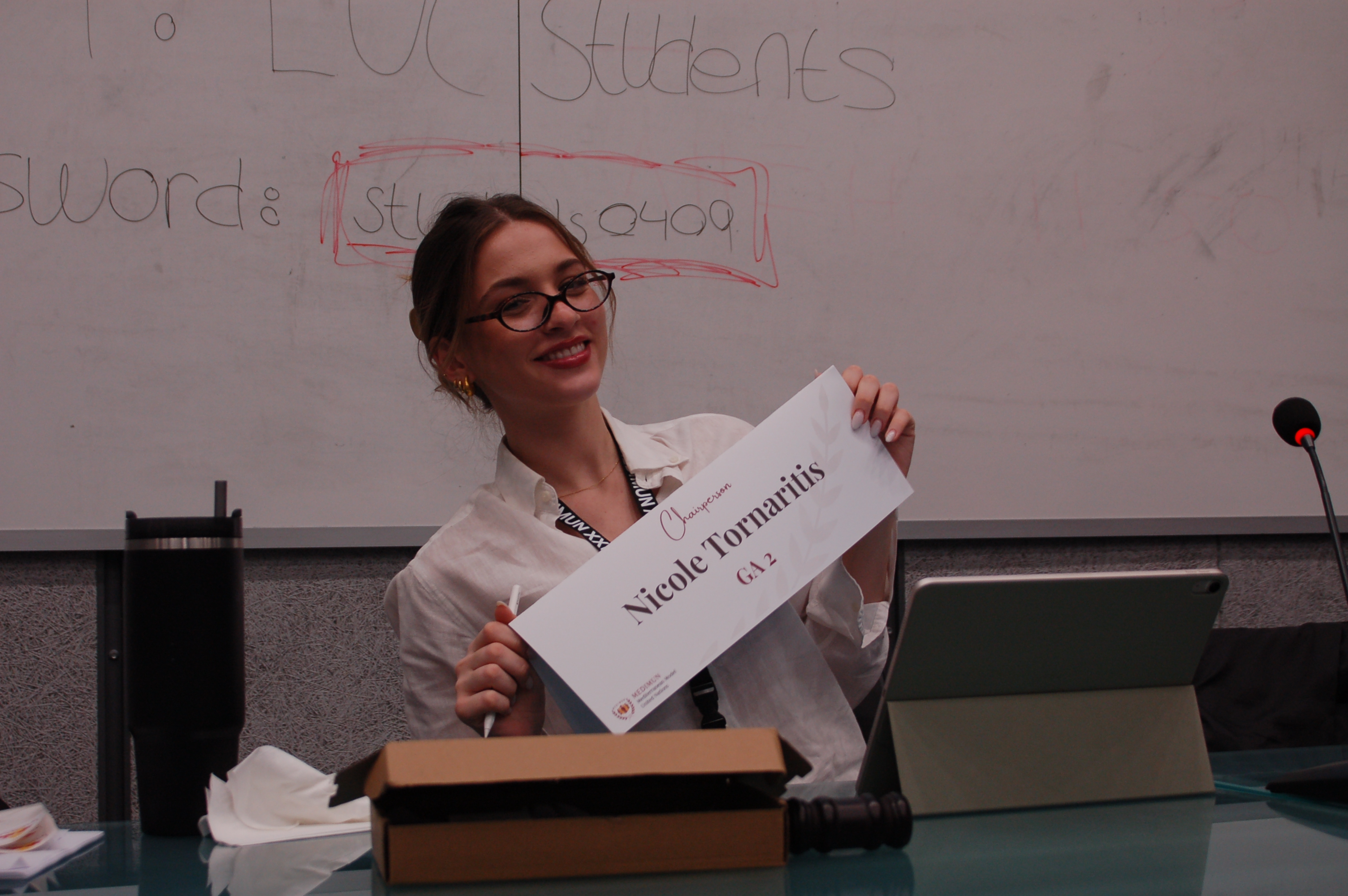
This committee focuses on exploring the economic and environmental challenges that hamper sustainable development and international cooperation. It aims to promote equitable approaches to sharing resources, tackling environmental crime and strengthening economic sustainability in global networks.
Topics |
|---|
The question of addressing transboundary water disputes in an era of resource scarcity. |
The question of combatting wildlife trafficking. |
The question of maintaining the effectiveness of economic sanctions. |
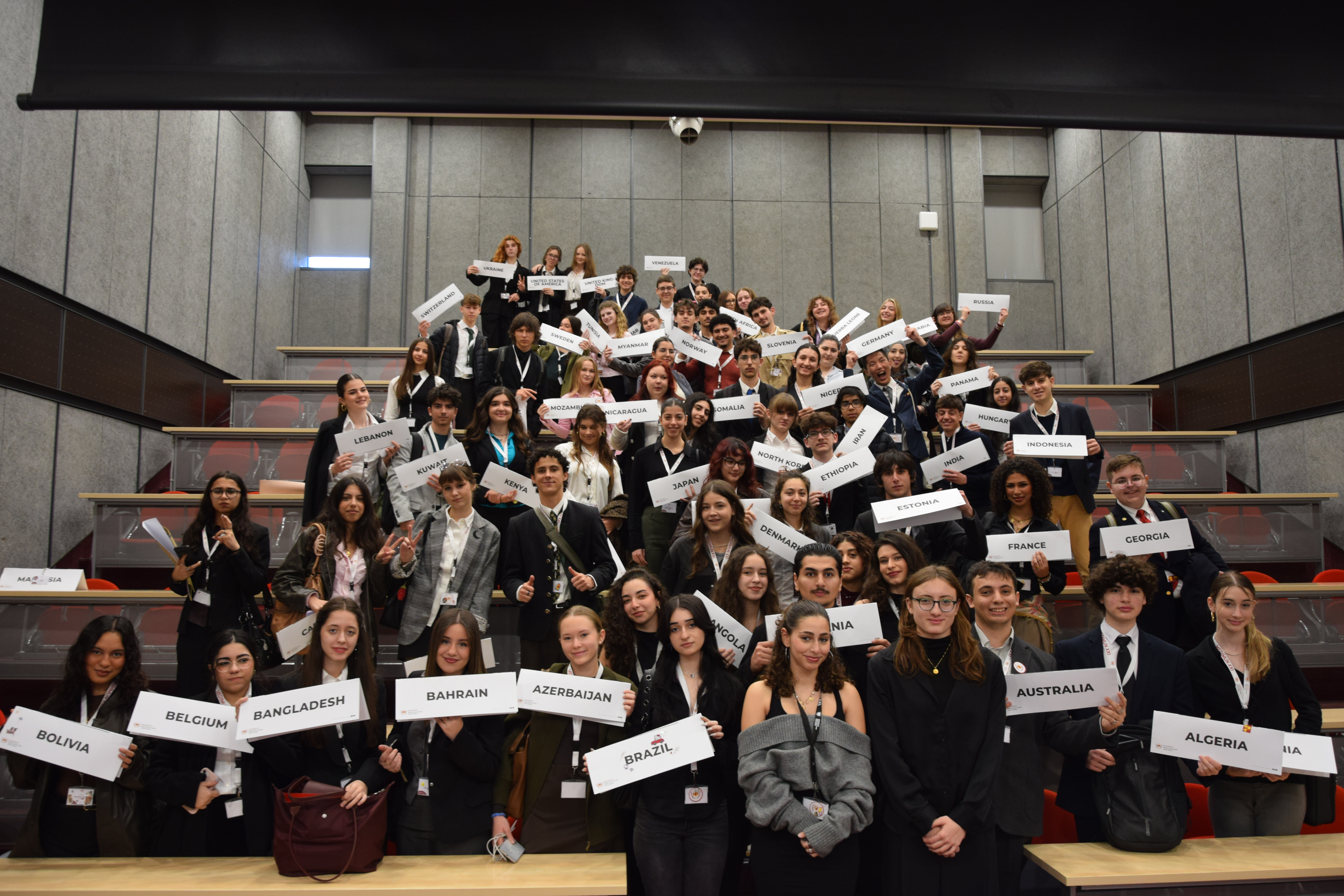
GA3: Social, Humanitarian and Cultural
This committee addresses social issues that affect communities and individuals in an increasingly fractured interconnected world, while continuing to promote social cohesion, the protection of human rights and the preservation of cultural heritage.
Topics |
|---|
The question of addressing media-induced political polarisation amongst youth. |
The question of international responsibility towards climate-displaced persons. |
The question of preserving cultural identity in postcolonial societies. |
GA4: Legal Committee
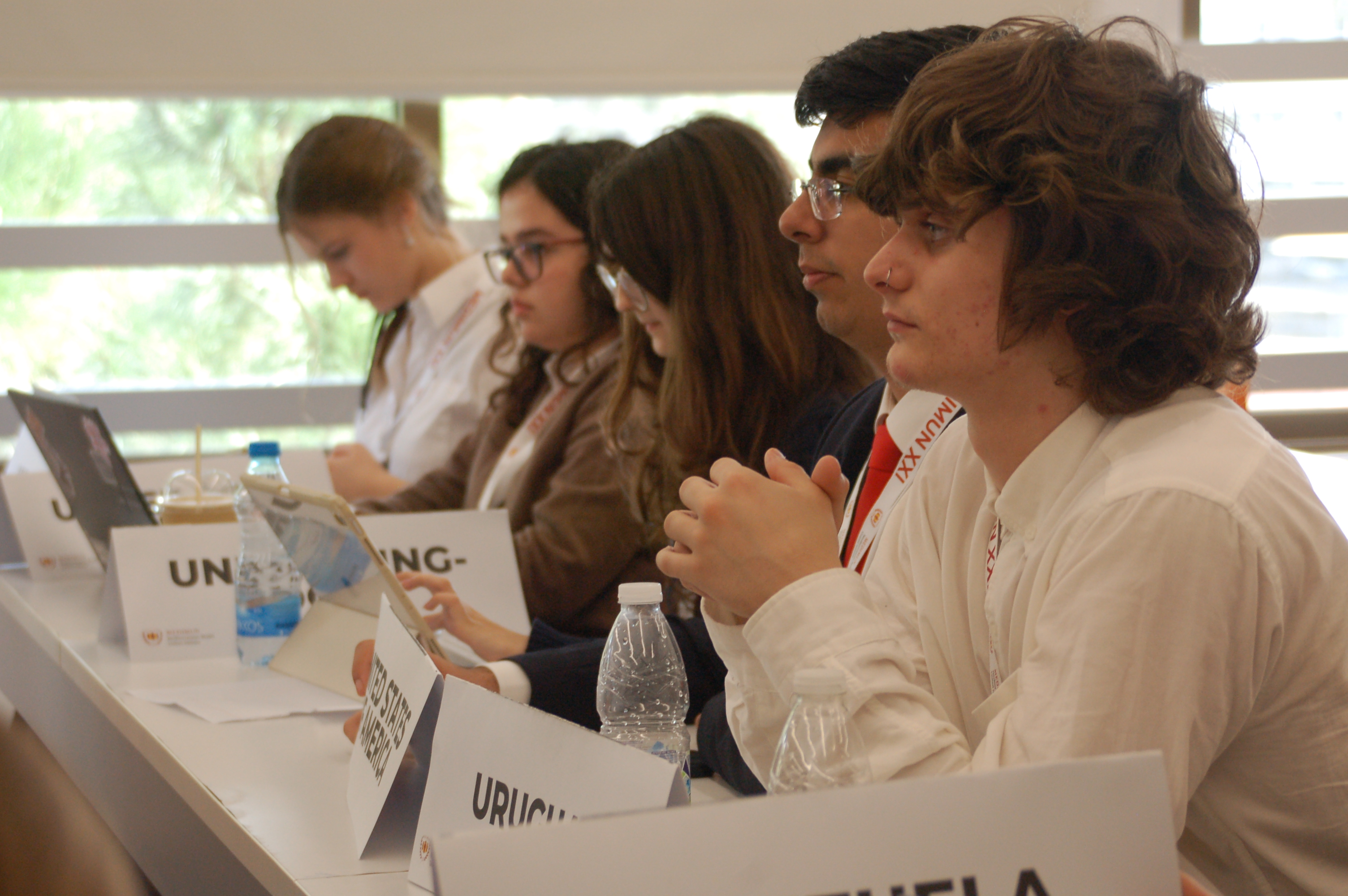
This committee serves as a legislation review committee, allowing delegates to examine existing legal frameworks on both a national and international level, identifying areas that require refinement in order to sustain their effectiveness and implementation.
Topics |
|---|
The question of determining ownership of international cultural artefacts. |
The question of legal accountability for war crimes. |
The question of protecting workers' rights in the age of Artificial Intelligence. |
Security Council
This committee finds itself at the top of the decision-making hierarchy within the United Nations. It possesses the power to pass resolutions administering measures upon member states, including the implementation of economic sanctions, thereby handling any disputes that threaten international security and peace. It notably has the ability to instruct member states to enforce trade embargoes and proceed with military action in situations it deems necessary.
Given its reputation, the council is designed for experienced delegates that wish to explore the decision-making powers of the UN further, experiencing a more intense debate setting, one step up from the General Assembly.
Topics |
|---|
The situation in Venezuela. |
The situation in the Arctic region. |
Historical Security Counci
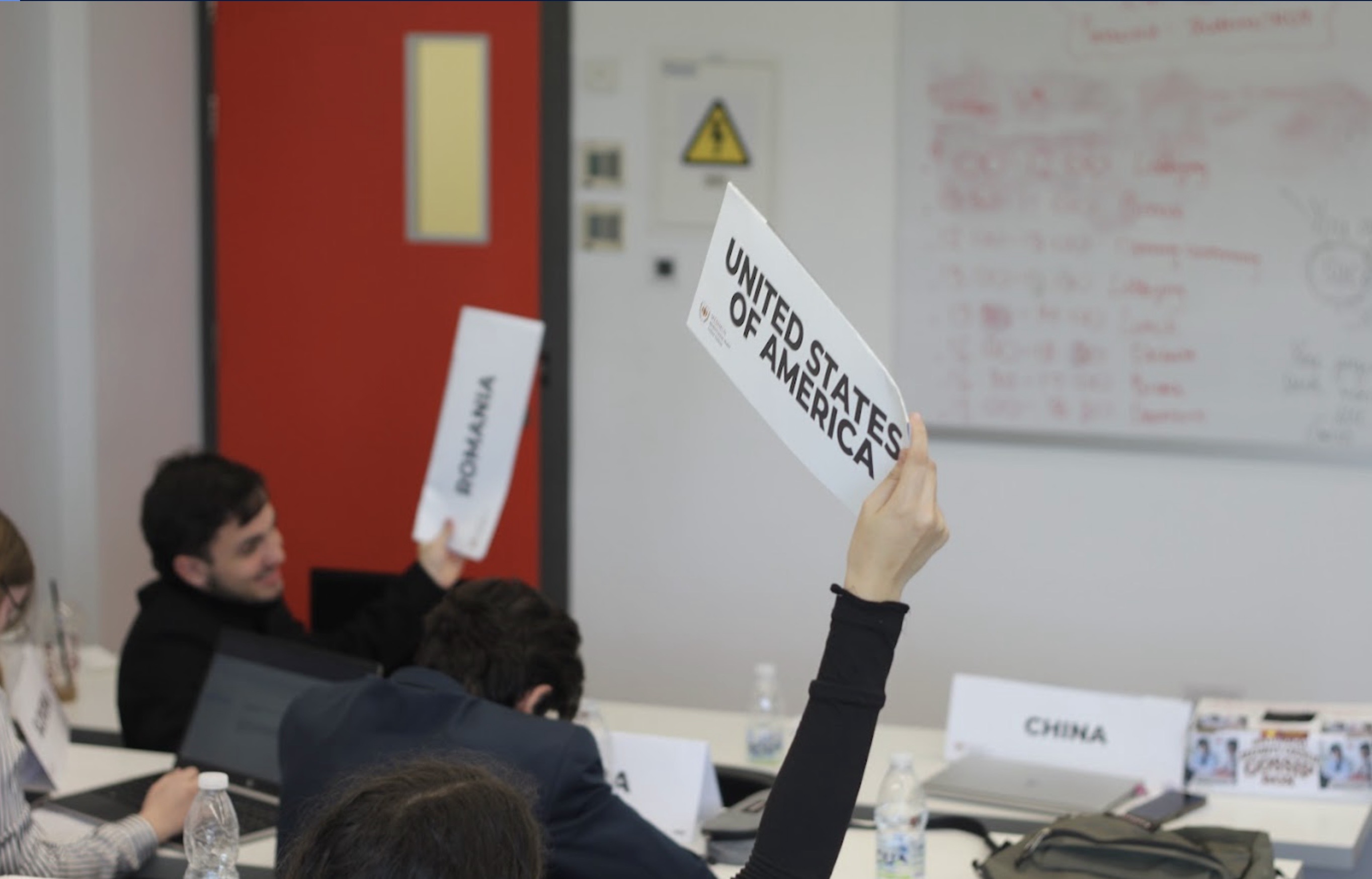
In an attempt to highlight the importance of learning from the past, MEDIMUN includes the Historical Security Council (HSC) in its committees.
Like the Security council, the HSC discusses topics of the global agenda, but in contrast, transports delegates back in time by reviewing instances of the past, not ones of the present day. It revisits old problems and considers all aspects related to them as if they were happening now, appealing to creative delegates with a passion for world history.
HSC debates are conducted based on historical facts, but delegates are required to formulate their own solutions and not consider the outcome of events, instead act as if they have been unresolved. This allows for the creation of new solutions to their topics, ones which may be more suitable, as they reflect on their knowledge of the past.
Topics |
|---|
The Congo Crisis (1960). |
The Suez Crisis (1956). |
Contemporary Historical Security Council — New this year
This committee follows the same format and rules of procedure as the Historical Security Council (HSC), while introducing a new dimension to historical debate at MEDIMUN. Focusing on conflict from the 1990s onwards, the CHSC encourages delegates to examine how the actions of major superpowers have shaped international crises and the effectiveness of international institutions, using hindsight to develop new solutions without considering the actual historical outcomes.
The committee serves as a broader exploration of this year’s theme, which regards the future of international cooperation by examining how past crises have shaped the current international system and what it can teach us about its future. Its topics feature moments where international cooperation and multilateral institutions were severely challenged, allowing delegates to critically assess past approaches and reflect on how their proposed solutions could address issues in the contemporary global environment.
The CHSC discussions are based on historical facts; yet participants will be required to formulate their own solutions to the issues on the agenda without considering the eventual historical outcome.
Topics |
|---|
The Kosovo Crisis (1999). |
The Second Gulf War (2003). |
Special Committee on the Charter of the United Nations — New this year
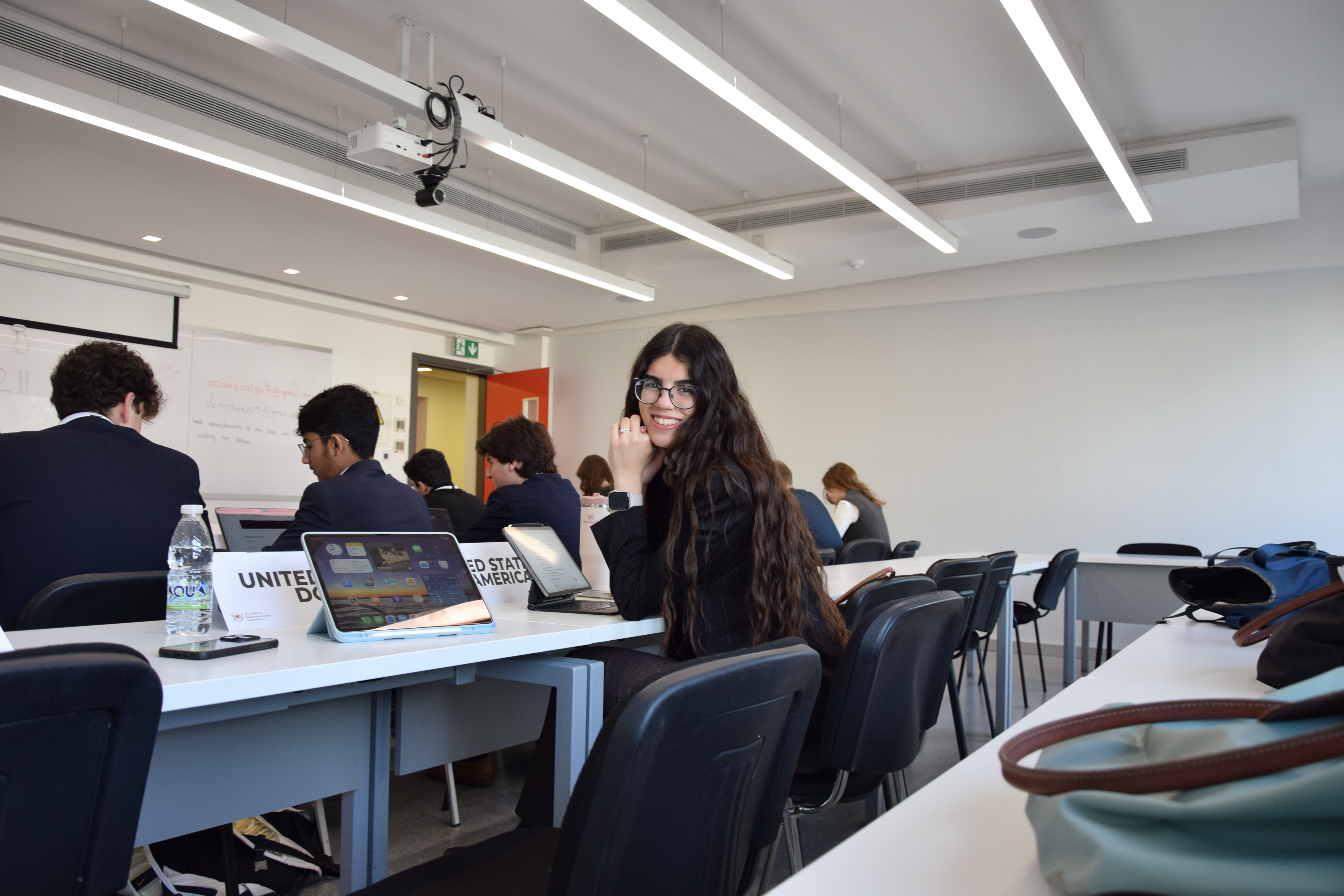
This committee is the centrepiece of MEDIMUN XXII’s exploration of the future of international cooperation. This experimental committee challenges delegates to look beyond working within the existing international system and instead examine how the structure and mechanisms of the United Nations can be strengthened, adapted and reimagined to better serve the global community.
This committee addresses a fundamental question: how can international institutions remain relevant and representative in a world where the interests of major powers can shape or constrain collective action? Delegates will thus examine the limitations of current UN frameworks, specifically in relation to representation and peacekeeping, developing solutions with the aim of strengthening the UN.
The SCC is intended for highly experienced and ambitious delegates with particular interests in geopolitics and international relations. This committee asks delegates not to simply navigate the system as it currently exists, but to consider what it should become.
 Topics |
|---|
The question of equitable representation within the United Nations Security Council. |
The question of strengthening the status of the United Nations peacekeeping operations. |
Introducing Mai — Our new AI Assistant
Mai is our new AI Assistant accessible by clicking the 2 stars in the top-right corner of MediBook.
Mai knows all about MEDIMUN, she can make changes for you and answer any question you have.
Mai will refuse to answer anything that counts as plagiarism; for example, she won't write your position paper for you.
After you have been added as a school director, delegate or member you will have access to Mai.
The MEDIMUN Library — New this year
This year, we are proud to introduce the MEDIMUN Library, a place for everyone attending MEDIMUN, organising MUNs outside MEDIMUN, and anyone interested in how an MUN works behind the scenes. The MEDIMUN Library contains:
All rules and procedures of MEDIMUN, including the debate procedure and the organisational rules.
Detailed MEDIMUN Application process.
The history of MUNs including MEDIMUN.
How an MUN operates behind the scenes
How to organise an MUN.
You can access the library from the MEDIMUN website and MediBook by going to medimun.org/docs and medimun.org/medibook/library accordingly
Delegation Applications & Support
As with previous years, delegation applications will be submitted through MediBook, but with a slightly updated process.
Please note that, as always, we do not accept individual delegates applying on their own; all applications must be submitted by a group or organisation with a School director present.
If your school is not listed, you can now submit a school application through MediBook via the school director application page.
The application process in summary is as follows:
Step 0
All students, school directors, and others require MediBook Accounts to attend the conference. If you don't have an account from a previous year, you can create one at medimun.org/signup. If you are a School Director, tell your students who do not have accounts to create one as soon as possible. Students who are under the age of 18 will be required to go through the automated parental consent process, where they will be asked to enter their parents' emails, who will be sent links to give signed consent. The whole process is automated; the students can also copy and send the consent links to their parents, without emailing, if needed.
Step 1 — School Director Applications
Each School Director needs to apply via the School Director Applications page on MediBook, even if they directed a school in a previous year.
When applications are open, you will see a link to the School Director applications on the MediBook home page.
In the School Director Applications, you will be asked to enter which school you are applying for, and if you will be physically attending the conference for billing purposes, you can change the declaration of whether you will be attending later on until the delegation change deadline, so don't worry if you change your mind later on.
After you submit the required info, your application will be received. The result of your application will be available on MediBook, and you will also be sent an email when you've been approved.
If your school is not listed in the list, you can click "My School is not listed" and apply for your school to be on MediBook.
Step 2 — Delegate quantity estimation & Country Preferences.
After your School Director application has been processed, you will have access to the My Delegation page on MediBook. You can see this in MediBook's left sidebar, near the top. The rest of the application process is all handled through this page. When you visit the My Delegation page, you will be asked to send an estimate of how many delegates you will be bringing to the conference this year as a School/Organisation. You will also be asked for which countries you want to be assigned.
There are 2 types of delegates: General Assembly Delegate and Special Committee Delegate. Special Committee Delegates need to be experienced and must have attended MUNs in the past. You request the number of Special Committee Delegates you plan to bring individually; however, you request the number of General Assembly Delegates you plan to bring in groups of 4.
Each General Assembly Delegation you request grants you the right to bring 4 students.
Each Country can only be assigned to one school/organisation
For each country your school/organisation is assigned, you will have to send 4 delegates, one in each and every General Assembly to represent that country. This means that each country you are given counts for 4 delegates. This is in addition to the Special Committee delegate spots you can request.
If you request to bring more than 3 General Assembly delegations (3 countries), or more than 15 delegates overall including Special Committee delegates, we may assign you fewer spots than you originally requested due to increased demand.
For example, if you request 3 General Assembly Delegations, 1 Delegate in HSC and 1 Delegate in SCC, you have requested to bring 14 students in total.
After you send the estimates, we will automatically receive and process your application. If your school has multiple school directors, only 1 has to complete this process. Don't worry, MediBook does not allow you to submit multiple delegation estimations from the same school.
After your estimation has been processed, you will receive an email and a MediBook notification. You can visit the My Delegation page, the same page you've applied on, to see how many spots and which countries we have given your school/organisation.
The number of slots we have given you may be more or less than the number you requested.
3 — Delegate Allocations
After you get a decision on your allocations, you can visit the same page you've used to apply, the "My Delegation" page, where you will see a form to assign students from your school to the spots we have given your school/organisation.
To appear in the list of assignable students, the students need to fulfil the conditions of:
Having a MediBook Account
If they are a minor, they need to have their parental consent process completed
They need to be at least 15 and at most 19 years old
In their account settings or when signing up, they need to have selected the school/organisation you are the director of as the school they attend.
If a delegate meets these conditions and does not appear they may be ineligible to join, please contact us through the contact us page, at medimun.org/signup in such a case.
This is the final form you have to fill out before payment.
Congrats — you've reached the end of the application process.
4 — Payments
After completing the first three steps, you will receive an invoice on the Invoices page, which can be navigated to by clicking Invoices on the sidebar, two options below "My Delegation".
On the page, you can choose to automatically email the invoice to your accounting department so they can pay it without a MediBook account.
The Invoice can ONLY be paid with a credit or debit card.
We do not accept bank transfers
We do not accept JCC Smart
We do not accept cheques
After you pay, your delegates will be fully assigned to their committees, and you will immediately be able to access a receipt on the same page you paid.
5 — Changes
MediBook now allows change requests to be Submitted and automatically approves them in some cases. This can also be done from the "Changes" page in the sidebar.
From this year onwards, you can make all changes to your delegation yourself. In some cases, without even needing our approval.
Emails about change requests will be ignored. If MediBook does not allow you to make changes, then even if you email us the change, it will be denied.
Changes are free of charge until the cutoff date, after which they will be charged to cover logistical costs such as printing new nametags and placards.
You can also ask Mai, our AI assistant, by clicking the stars in the top-right corner of MediBook to submit the change request for you.
This whole process results in a much faster response time for changes.
Info on the new Slots System & Changes
From this year onwards, MEDMUN will not give out refunds for dropouts; instead, we will give you back what's called a slot. Each slot allows you to send a person to the conference free of charge. You will be able to use this slot to send a delegate or School Director to the conference free of charge in the next session. Likewise, if you want to submit a request to, for example, add a delegate in addition to the ones you are approved for, you will have to buy a slot for them. You no longer pay for delegates and School Directors; you pay for slots that you can use later.
Slots expire after 2 years from the day they are bought. Until they expire, they can be used to assign a school director to physically attend, or they can be used to assign a delegate to a committee.
If a school director is not going to physically attend they do not have to buy a slot or pay in any way.
Detailed Application Process
By clicking here, you can find a document detailing the application process.
Contacting Us & Support
Mai is our new AI Assistant accessible by clicking the 2 stars in the top-right corner of MediBook.

After you are approved as the school director, you will have access to Mai.
You can ask Mai for support at any point in the application process or afterwards about anything.
Some questions you can ask Mai include:
Mai, can you tell me if any of my students are late in submitting their position papers?
Mai, can you submit a request to change delegate X for delegate Y?
Mai, can you tell me how delegates make points of information during a debate?
Mai, can you tell me if my delegates are marked as present in the register?
Mai, can you tell me if MEDIMUN allows us to send more than 4 Special Committee delegates?
Mai knows everything about MEDIMUN, can make changes to your delegation directly, and if she does not know the answer to something, she will ask the organisers and get back to you by email.
Mai is the fastest way to get answers, make changes, and get updated. Please use Mai as your primary contact unless there is an emergency.
Other ways to contact us:
E-mail: info@medimun.org
Phone: +357 22 799 300 (8 AM to 2 PM Weekdays)
Delegate Selection Expectations
To ensure a professional and high-standard conference, all participants are expected to meet the following criteria:
Proficiency in English: Delegates should possess a strong command of the English language, necessary for formal resolution writing and effective debating.
Interest in International Affairs: Participants should demonstrate a keen interest in and knowledge of global issues and international affairs.
Research Skills: The ability and enthusiasm to conduct in-depth research on assigned topics are crucial for effective participation.
Age Range: Delegates should be between 15 and 19 years of age and currently enrolled in secondary school.
Preparing Delegates for Success
MUN Directors are encouraged to take proactive steps in preparing their delegates for the conference:
Leverage Experienced Students: Incorporate experienced MUN students to mentor and support first-time delegates, helping them navigate the MUN experience effectively.
Utilise Provided Resources: Make use of the materials and resources provided by MEDIMUN to educate delegates about Model United Nations (MUN) procedures and expectations.
Detailed Conference Information: Provide detailed information about the conference, including insights from previous Annual Sessions, to help delegates understand the context and objectives.
Assist with Research: Support participants in their resolution drafting and research on MUN and UN-related topics.
Group Country Presentations: Schedule group presentations where delegates can share insights about their assigned countries to enhance their understanding of international perspectives.
Mock Debates: Organise mock debates to familiarise delegates with the rules of procedure used in MUN conferences, ensuring they are well prepared for formal debates.
The MediNEWS Gazette
MEDINEWS, the official MEDIMUN newspaper, will be available directly through the MEDIMUN website once released, giving participants easy access to coverage of the conference. A team of student journalists capture the highlights of the conference, from committee debates and key developments to memorable moments from across the conference. Articles will provide insights into the work of each committee and important developments, alongside delegate perspectives. Participants can directly access previous MEDINEWS issues from 2010 onwards, exploring how debates in MEDIMUN have changed over the years. Participants will be able to access MEDINEWS through our website and explore the discussions, decisions and experiences that make MEDIMUN such a unique conference.
The MediBook App — Now with 1000 new features
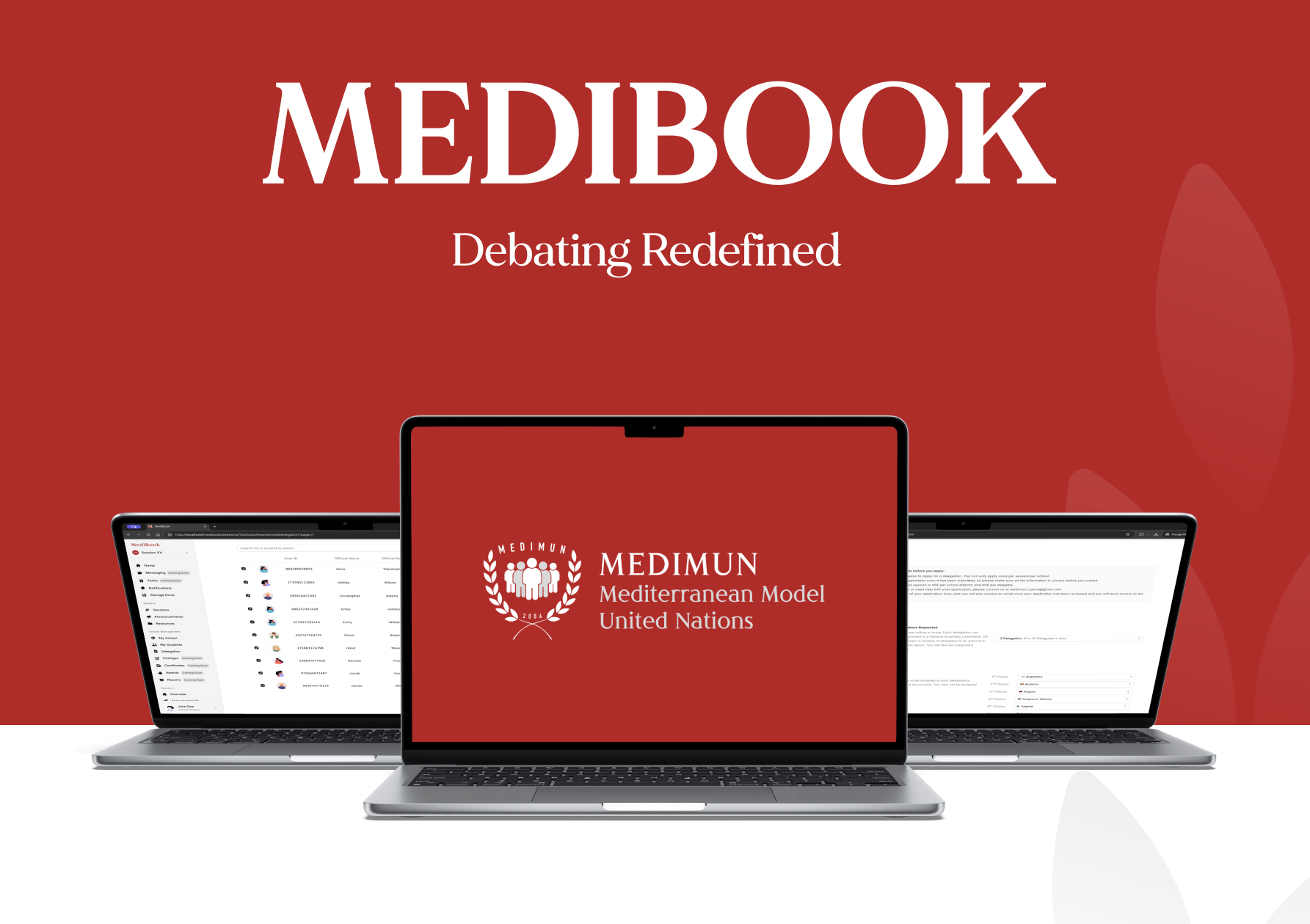
MediBook is the world's most advanced debate and Model United Nations software. Built for MEDIMUN, it puts the whole conference in every delegate's pocket. This year MediBook gets a massive upgrade with more than 1000 new features and improvements. Follow every speech, motion and vote live from your seat. Team up with your alliance and write resolutions together in real time. Chat with your committee, jump on a video call and never miss an announcement. From your first position paper to your final certificate, your whole MUN journey lives in one place. Schools get a smoother experience too, with delegations sorted in minutes. MediBook doesn't just run the conference. It raises the bar for what MUN can be.
Live debate: every speech, motion and vote, live on your device.
Resolution writing together: draft clauses with your alliance and send them to the chairs in one tap.
Position papers: write, submit and get feedback from your chairs, all in one place.
Instant check-in: start each day with your personal QR code.
Messenger: committee chats, direct messages and group chats, built right in.
MediMeet Video Calls: meet your alliance, join workshops and share your screen from anywhere.
Everything at hand: the programme, announcements, files and rules of procedure.
Digital certificates: download your certificate and awards, and anyone can verify them online.
Made for schools: teachers manage their delegation, pay online in minutes, see their delegates' deadlines and progress.
The MediBook Mobile App is coming to the Apple App Store and Google Play Store on 30th of September, 2026.